What to Know Before Replacing an Electric Oven
Replacing an electric oven? Learn about 240V connections, warranties, safety, and when it’s time to call a licensed electrician before you hook it up.
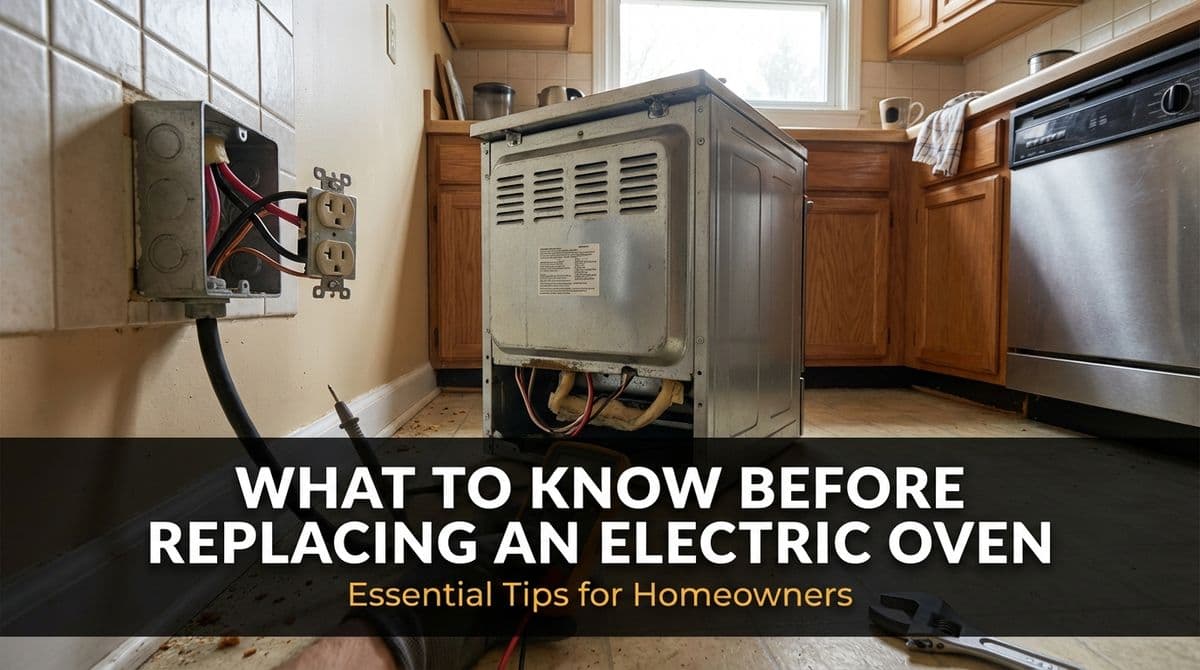
What Homeowners Should Know Before Swapping an Electric Oven
We recently got a call from a homeowner — let’s call her Amanda — who had a brand-new electric oven dropped off in her kitchen. The delivery crew brought it in, unboxed it, and then said the words nobody wants to hear: “We don’t install.”
Amanda told us, “We could probably hook it up ourselves, but I’m worried we’ll void the warranty if we do it.” On top of that, she had “a ton of cookies” to bake and really needed the oven working that day or the next.
If you’ve ever stood in your kitchen staring at a shiny new 240V appliance and wondering what’s safe, what’s legal, and what might mess up your warranty, you’re not alone. Let’s walk through what we explained to Amanda, and what you should know before replacing an electric oven.
Why Electric Ovens Need a 240V Connection
On the call, we confirmed right away that Amanda’s oven was an electric model requiring a 240V circuit. That’s very different from the standard 120V wall outlets you plug your toaster or coffee maker into.
Here’s the basic breakdown:
- Standard outlets in most rooms: 120V, typically on a 15–20 amp breaker.
- Electric ovens/ranges: 240V (often 40–50 amp), on a dedicated circuit.
That higher voltage and amperage are what let your oven heat up quickly and stay at temperature. But they also mean:
- Wiring is heavier gauge and must be sized correctly.
- The breaker must match the load and conductor size.
- Connections need to be tight and properly terminated to avoid overheating or arcing.
So when Amanda asked, “Can we just hook it up ourselves?”, our first thought was safety. A poor connection on a 240V circuit can lead to nuisance tripping at best and electrical fire risk at worst.
Like-for-Like Replacement vs. New Circuit
Next, we asked Amanda an important question: “Is this a like-for-like replacement, or is there an existing circuit?” She confirmed that this was simply replacing an older electric oven, with the hookups already there.
For many homeowners, this is the situation:
- There’s an existing 240V oven circuit in the wall.
- You’re swapping an old oven for a newer one.
- The old oven was hardwired or connected with a flexible metal conduit.
That’s good news, because in most cases a like-for-like replacement is more straightforward than running a completely new circuit. On our call, Amanda mentioned there was a flexible metal conduit coming from the wall — that’s very common for built-in electric ovens.
Even with a like-for-like replacement, though, we still check:
- The breaker size vs. the new oven’s nameplate rating.
- The wire gauge and condition of the existing cable.
- The condition of the junction box, connectors, and strain relief.
- Whether any local code updates affect the installation.
Warranties: When DIY Can Cost You
Amanda’s biggest concern was the warranty. She was right to be cautious. Many appliance manufacturers include language that says the unit must be installed:
- By a licensed electrician or qualified installer, and
- According to local electrical codes and manufacturer instructions.
If there’s ever a problem — say the control board fails or there’s damage related to wiring — the manufacturer can look at how it was installed. If they determine it wasn’t done by a qualified professional or wasn’t wired correctly, they may deny coverage.
That’s why we usually advise homeowners:
- Read your oven’s warranty booklet before you install.
- Look specifically for any installation requirements or exclusions.
- Keep your electrician’s invoice as proof of professional installation.
In Amanda’s case, having us handle the connection meant she could bake her cookies and sleep better knowing her warranty was protected.
What We Ask For Before We Come Out
When we were on the phone with Amanda, we let her know we might be able to fit her in that day or the next, but we wanted to see a few things first. We asked her to text us:
- A photo of the new oven’s data plate (usually on the frame when you open the door).
- A photo of the existing connection coming out of the wall.
- Any visible labeling on the breaker in the panel.
Those pictures help us:
- Verify the electrical requirements (voltage, amperage, wiring type).
- Confirm it really is a straightforward replacement.
- Give a more accurate price and time estimate before we arrive.
If you’re planning to replace your oven, snapping a few clear photos ahead of time can save a lot of back-and-forth and surprises on installation day.
When You Really Should Call an Electrician
There are some situations where we strongly recommend you do not DIY the oven hookup and instead call a licensed electrician:
- You’re not sure if the existing circuit is 240V or properly sized.
- The wiring looks damaged, brittle, or overheated.
- There is no existing oven circuit (you’re upgrading from gas or from a different location).
- The breaker panel is already packed, mislabeled, or confusing.
- Your home is older and has a history of electrical issues.
Even if everything looks fine, it’s worth a professional visit if you’re uneasy. We can verify the circuit, check the connections, and make sure everything is up to current code.
Tips If You’re About to Replace an Electric Oven
Before you schedule your replacement, here are a few quick steps you can take:
- Measure carefully: Confirm the new oven’s dimensions match your cutout.
- Locate the breaker: Identify which breaker controls the oven circuit.
- Collect documentation: Keep the installation manual and warranty handy.
- Take photos: Of the old setup, new oven label, and panel.
- Plan the timing: Especially if you’ve got a big baking or cooking day coming up, like Amanda with her mountain of cookies.
A little prep on your end helps us get in, get the oven safely wired, and get you cooking again with minimal downtime.
Need Help With Your 240V Oven Hookup?
If a delivery crew has just left a new electric oven in your kitchen and you’re wondering what to do next, you don’t have to guess. We handle 240V appliance connections all the time, from simple like-for-like swaps to full circuit upgrades.
Reach out, send us a few photos, and we’ll let you know what’s involved and when we can get you on the schedule. We’ll make sure your oven is wired safely, up to code, and in a way that keeps your warranty intact — so you can focus on what really matters: what’s going in the oven.